- Adolescent and Youth Health
- AI Integration
- Family Planning and Reproductive Health
- Gender Equity
- Global Health Security
- HIV
- Immunization
- Infection Prevention and Control
- Innovations
- Learning and Performance
- Malaria Prevention and Treatment
- Maternal Newborn and Child Health
- Measurable Impact
- Nursing and Midwifery
- Primary Health Care
- Tuberculosis
- Women’s Cancers
Guatemala
Guatemala
¡Hola!
Working since 1990 to strengthen Guatemala's health systems and expand access to care for women and families.

Selected Achievements
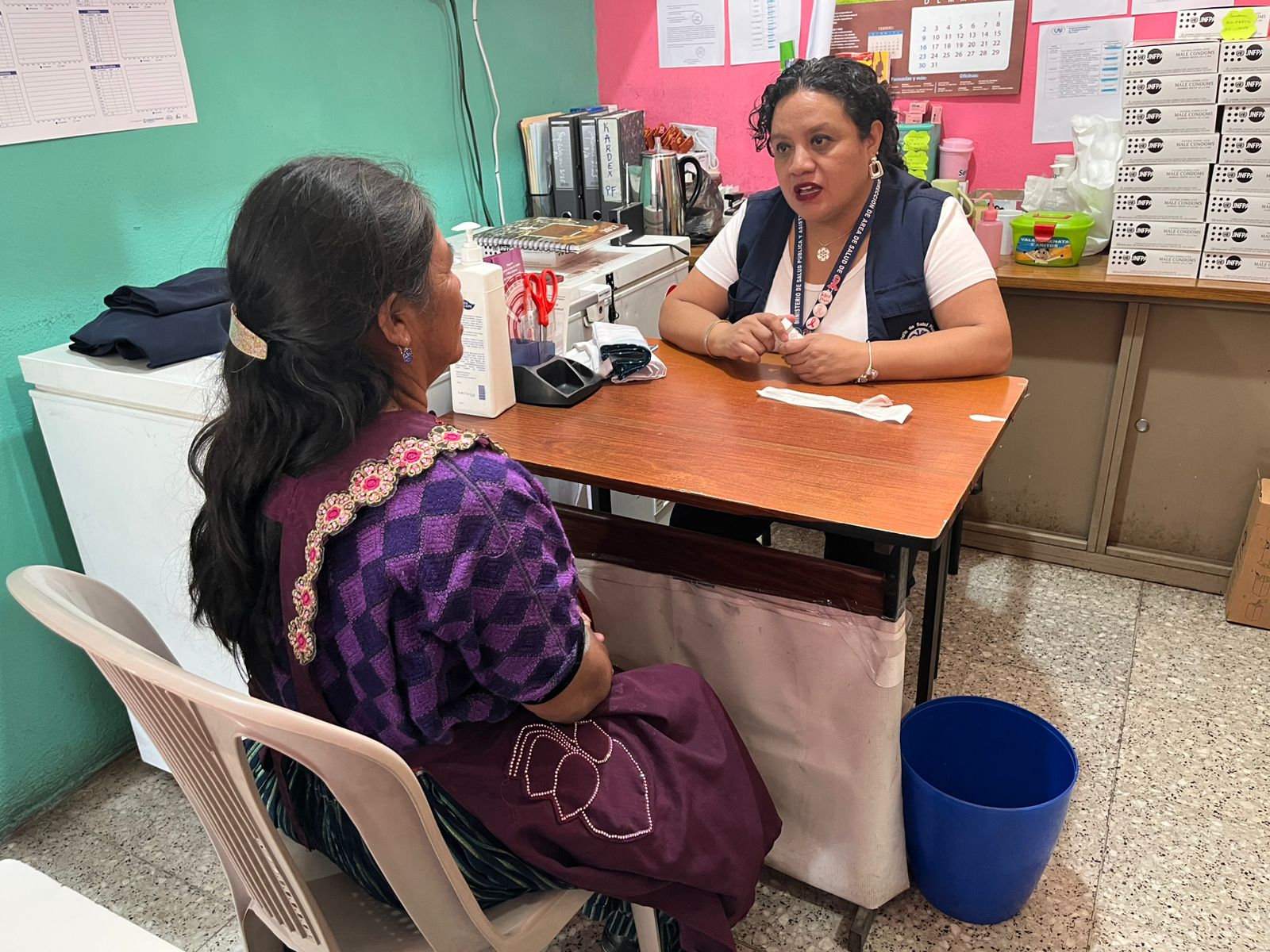
In partnership with the Ministry of Health, Jhpiego built lasting capacity to deliver more effective, dignified care in highly vulnerable communities by strengthening first-level care in 21 municipal health districts through locally adapted, continuous quality improvement.
Jhpiego provided technical assistance in more than 100 health facilities across Huehuetenango and Quiché, improving maternal, newborn, nutrition, and family planning services, as well as health security.
Jhpiego helped deliver 54,937 HPV self-sampling tests to women ages 30–49, achieving full screening coverage in Quetzaltenango. Among those who tested positive, 87.7% received clinical follow-up and 98.7% were treated using thermal ablation. In total, 5,284 positive cases were identified nationwide, and 96% of eligible women received treatment.
Jhpiego supported national emergency preparedness by mapping diagnostic capacity across 46 molecular biology labs and developing the VIGILAB 2.0 system to improve disease surveillance. We also trained health personnel from nine hospitals in mechanical ventilation and 42 lab technicians in molecular diagnostics using a standardized procedures manual.
In collaboration with the International Regional Organization for Plant and Animal Health and LARRSA, Jhpiego raised awareness about the reemergence of screwworm in the region. We brought together decision-makers, professionals, and students in human and animal health to discuss containment, surveillance, and reporting measures, reinforcing regional readiness for zoonotic threats.
Guatemala
Areas of Expertise
Our Projects
Country Director

Dr. Ana Garcés
Guatemala Country Director

Our Stories


Donors + Partners
Asociación de Salud Integral (ASI)
Asociación de Servicios Comunitarios de Salud (ASECSA)
Asociación Guatemalteca de Enfermedades Infecciosas (AGEI)COMISCA (Consejo de Ministros de Salud de Centroamérica y República Dominicana)Dirección de Laboratorio Nacional de Salud (DLNS)Expertise FranceInstituto de Nutrición de Centroamérica y Panamá (INCAP)Laboratorio de Referencia Regional de Sanidad Animal (LARRSA) de la Universidad de San Carlos de Guatemala (USAC)Ministerio de Agricultura, Ganadería y Alimentación (MAGA)Ministerio de Salud Pública y Asistencia Social (MSPAS)Organización de las Naciones Unidas para la Alimentación y la Agricultura en Guatemala (FAO Guatemala)Organización Panamericana de la Salud/Organización Mundial de la Salud en Guatemala (OPS/OMS Guatemala)UnitaidU.S. GovernmentWildlife Conservation Society (WCS)